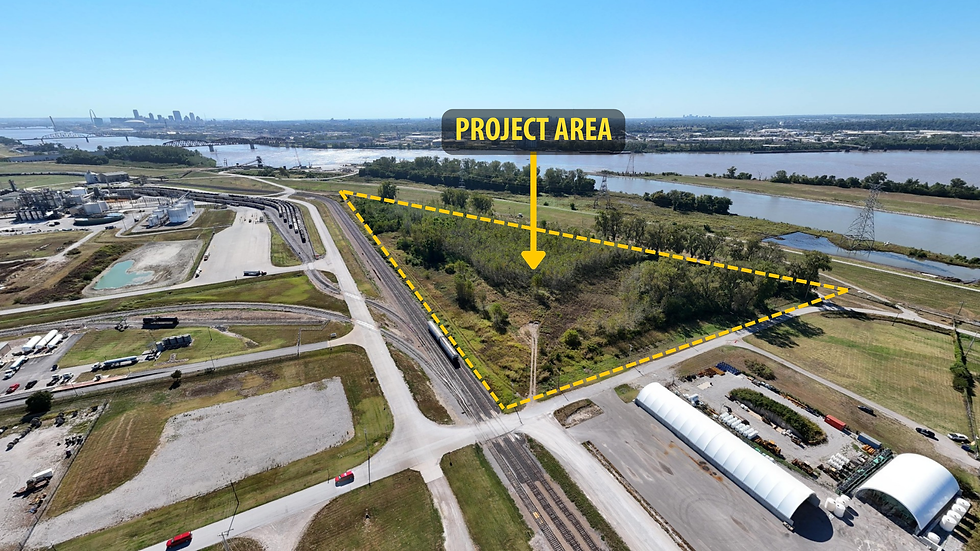
General Port Statement:
America’s Central Port is currently evaluating long-term development opportunities involving rail-served and non-rail-served properties within its jurisdictional boundary as part of its broader economic development and industrial growth strategy.
The Port’s long-term vision is to position strategically located properties to support future large-scale industrial, manufacturing, logistics, and infrastructure investment opportunities that leverage the region’s multimodal transportation advantages.
Over the past 18 months, the Port has received interest from multiple parties regarding potential development opportunities, including representatives associated with the data center development sector. At this stage, discussions remain preliminary and are part of the Port’s standard due diligence and property evaluation process.
No final development plans, site plans, utility agreements, purchase agreements, or development approvals currently exist. Any future transaction involving Port-owned property would require formal review and approval by America’s Central Port Board of Commissioners in accordance with applicable governance and public process requirements.
FAQ
Is the Port actively trying to recruit a hyperscale data center?
No, but the Port is receiving regular unsolicited requests from land assemblers seeking data center-capable sites.
Has the Port entered into negotiations with a data center developer?
No, but the Port is in discussions with a land assembler seeking to attract a data center. These discussions remain preliminary and are part of the Port’s standard due diligence and property evaluation process. No final development plans, site plans, utility agreements, purchase agreements, or development approvals currently exist. Any future transaction involving Port-owned property would require formal review and approval by America’s Central Port Board of Commissioners in accordance with applicable governance and public process requirements.
Who is the land assembler representing?
Unknown. A land assembler’s objective is to assemble properties and remove hurdles associated with development to present to prospective users. To the Port’s knowledge, the land assembler intends to attract a data center if it is able to purchase the property, but has not identified a specific end user at this time.
Why is the Port considering data center development on publicly controlled land?
America’s Central Port evaluates a wide range of potential industrial and economic development opportunities consistent with its mission to support regional growth, strengthen infrastructure investment, and maximize the long-term strategic value of publicly controlled property.
At this stage, no decision has been made regarding any specific data center project. However, given the increasing national demand for large-scale infrastructure sites with strong transportation access and utility availability, it is appropriate for the Port to evaluate interest from a variety of sectors, including manufacturing, logistics, distribution, and emerging technology infrastructure.
Large-scale development projects can also generate substantial short-term construction employment, long-term property tax revenue, and infrastructure investment that may benefit the broader regional economy. Those potential benefits are among the many factors the Port would evaluate alongside long-term economic benefits, infrastructure impacts, land-use compatibility, job creation, fiscal returns, and alignment with the Port’s broader strategic objectives. Any transaction involving Port-owned property would also require formal review and approval by the Board of Commissioners.
Would this project take land away from rail-served manufacturing or logistics uses?
Yes. The property being evaluated includes strategically located acreage with unique rail access and characteristics that could support future large-scale manufacturing, logistics, or transportation-related development.
Sites with access to multiple Class I railroads, interstate connectivity, nearby industrial utilities, and a strong regional workforce are extremely rare and limited, not just in the St. Louis region, but nationwide. Those characteristics make this type of property uniquely positioned to compete for major industrial investments that can create substantial long-term employment and regional economic impact.
At the same time, attracting transformational manufacturing or logistics projects of that scale is highly competitive and often requires years, and in some cases more than a decade, of site preparation, marketing, infrastructure investment, and business recruitment efforts before a project ultimately materializes.
Part of the strategic discussion for the Port is balancing the long-term potential of preserving land for future rail-served industrial recruitment against other development opportunities that may generate more immediate revenue, tax base growth, infrastructure investment, or construction activity. Those are complex economic development considerations that the Port’s Board of Commissioners would weigh carefully before making any final decision.
Has the Port already committed to selling or leasing the property?
No. The Port has not committed to either a sale or a lease of the property at this time, and no final agreement currently exists.
Have any contracts, letters of intent, exclusivity agreements, or purchase options been signed?
No. At this time, no final purchase agreement, development agreement, or approved transaction involving the property exists.
How much land is being considered?
The Port and other regional stakeholders continue to evaluate multiple potential development sites of varying sizes in the Granite City area. Those sites range from approximately 290 acres to more than 1,000 acres, depending on configuration.
Would local residents or businesses see higher electricity or water rates because of a hyperscale facility?
The Port is not in a position to determine what impact a potential project could have on the electric grid or utility system. Those types of analyses are performed by utility providers in coordination with the site owner and prospective developer through separate technical review processes.
The Port is not involved in utility service negotiations or grid planning discussions and therefore cannot comment on potential infrastructure requirements, system impacts, or future utility-related determinations.
Similarly, a Land Assembler would not be in a position to determine or provide technical assessments regarding a potential project’s impact on the electric grid or local utility systems.
What economic benefits would a data center bring compared to traditional industrial development?
The Port acknowledges that much of the economic impact associated with these projects typically occurs during the construction phase through union labor, skilled trades activity, contractor participation, and regional spending. However, projects involving substantial private capital investment can also generate significant long-term property tax revenue and infrastructure investment that may help support local governments, schools, public infrastructure, and essential public services.
The Port recognizes that communities in Southwestern Illinois, like many regions across the country, continue to face rising costs of maintaining roads, utilities, public infrastructure, and core government services. As part of its long-term stewardship responsibilities, the Port believes it is important to evaluate opportunities that could strengthen and diversify the regional tax base while supporting long-term economic sustainability.
At the same time, the Port continues to recognize the strategic importance of preserving rail-served industrial land capable of attracting major manufacturing, logistics, and transportation-related investments that can create substantial long-term employment opportunities. Part of the strategic discussion for the Port is balancing the long-term potential of preserving land for future rail-served industrial recruitment against other development opportunities that may generate more immediate revenue, tax base growth, infrastructure investment, or construction activity.
Those are complex economic development considerations that the America’s Central Port Board of Commissioners would weigh carefully before making any final decision involving publicly controlled property.
Press Inquiries: